 Clamping & Workholding
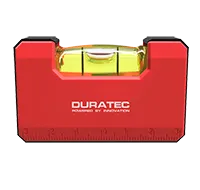 Measuring & Layout
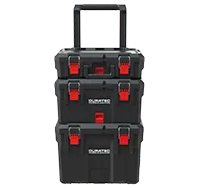 Storage & Organization
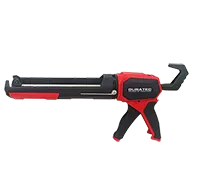 Caulking & Sealing
 Jigs & Guides
 Work Supports & Stands

 Home
What are initial clamping force and stable clamping force?
Clamping force is not simply a single instantaneous value.
Initial Clamping Force is the force generated immediately after a clamp has been tightened. It reflects the clamping capability at the moment force is applied, but it does not necessarily represent the force that can be maintained throughout the actual working process.
Stable Clamping Force is the force that remains after the clamp has been tightened for a period of time and the entire clamping system has stabilized.
After tightening, clamping force typically decreases from its initial peak before gradually reaching a stable level. During Duratec quality control, clamping force is typically measured one hour after tightening to evaluate stable clamping performance.
In actual use, the bar, clamping arms, handle mechanism, and engineering plastic components are all subjected to load. Elastic deformation, mechanical clearances, and stress relaxation in certain materials can all contribute to a gradual reduction in initial clamping force.
For this reason, stable clamping force often provides a more meaningful indication of real-world clamping performance than a high instantaneous peak value alone.
When developing clamps, Duratec not only considers how much force a product can generate, but also how much of that force can be maintained under sustained load. This is particularly important for panel gluing, bonding, assembly, and other applications where pressure must be maintained for extended periods.
What do level accuracy and inverted accuracy mean?
Level accuracy indicates the maximum permissible measurement deviation over a given distance and is commonly expressed in mm/m.
For example, an accuracy of 0.5 mm/m means that over a measuring distance of one meter, the maximum permissible deviation is 0.5 mm. The smaller the value, the higher the measurement accuracy.
Inverted Accuracy refers to the accuracy achieved when the spirit level is turned upside down and used in the inverted position.
In real working conditions, a level cannot always be placed on top of the surface being measured. When working on ceilings, overhead beams, frames, or other upper structures, the level may need to be used upside down. In these situations, reliable inverted accuracy becomes especially important.
For example, some Duratec professional levels provide a standard measuring accuracy of 0.5 mm/m and an inverted accuracy of 0.75 mm/m. Certain models can achieve 0.5 mm/m in both standard and inverted positions.
Inverted accuracy is therefore not simply an additional specification. It is an important performance factor for overhead measurements and specialized installation work.
Why can Duratec spirit levels maintain their accuracy for years?
Achieving high accuracy when a spirit level leaves the factory is only part of the challenge. The greater challenge is maintaining that accuracy after years of use, temperature changes, transportation, vibration, and impacts on the jobsite.
Duratec controls long-term level accuracy in several ways.
First, the vial must be securely fixed inside the aluminum profile.
Some Duratec professional levels use high-pressure injected epoxy resin to secure the vial. Once cured, the epoxy forms a highly stable fixing structure that helps reduce the possibility of vial movement caused by long-term vibration, impact, or temperature variation.
Second, the aluminum body is designed for high rigidity.
A strong profile and carefully engineered cross-section help reduce the risk of bending or twisting over time, allowing the measuring surface to remain stable.
On selected professional models, Duratec also uses specially designed internal reinforcement structures. Where machining reduces the effective cross-section of the aluminum profile, high-strength engineering plastic components are used to reinforce these areas and improve overall structural rigidity.
These internal reinforcement components may not be visible to the user, but they can play an important role in maintaining long-term measurement stability.
For Duratec, level accuracy is therefore not only about how accurate the product is when it leaves the factory, but also whether it can remain reliable after years of real-world use.
Why do some Duratec tools use induction-hardened steel or bars?
For clamps and other tools subjected to significant mechanical loads, both strength and wear resistance are critical.
Induction hardening is a heat-treatment process used to strengthen selected areas of steel. By rapidly heating and carefully cooling the surface, the process can significantly increase surface hardness and wear resistance while retaining the toughness required within the core material.
This is particularly valuable for clamp bars.
A harder surface helps reduce wear caused by repeated sliding, locking, and loading of the movable jaw. At the same time, a tougher core helps the bar withstand bending loads generated during clamping.
Appropriate material selection and induction hardening therefore help improve long-term durability and maintain consistent performance under heavy and repeated use.
What is MultiThrust?
Thrust Ratio is an important performance parameter of a caulking gun. It describes the mechanical relationship between the force applied by the user at the handle and the resulting force applied to the cartridge piston.
Sealants, adhesives, and filling materials can vary greatly in viscosity.
With low-viscosity materials, an excessively high thrust ratio may reduce dispensing speed and control. With high-viscosity materials, a thrust ratio that is too low can significantly increase the effort required from the user.
Selecting the appropriate thrust ratio therefore helps improve working efficiency, control, and comfort.
Most caulking guns on the market use a fixed thrust ratio. Some products offer two selectable thrust settings.
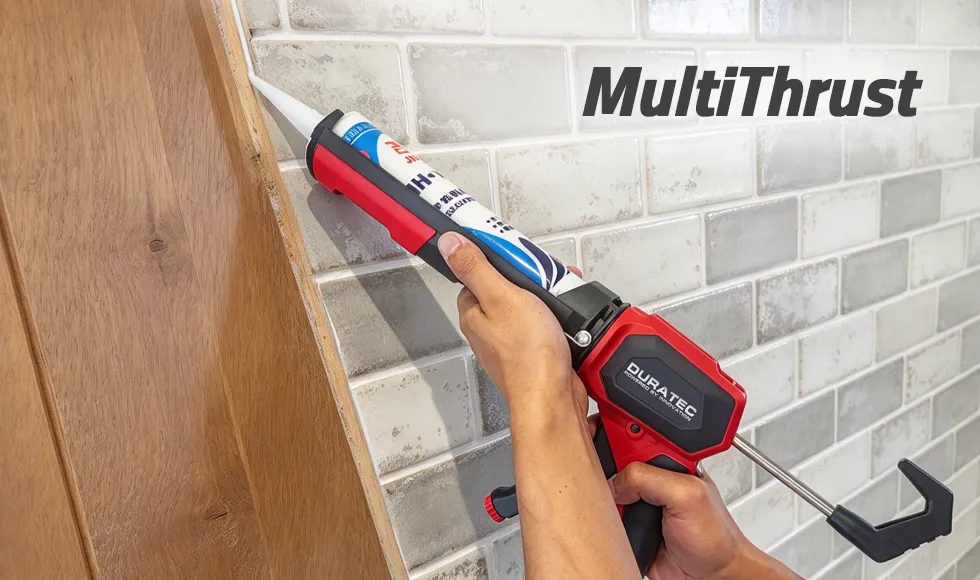
Duratec’s patented MultiThrust mechanism allows users to select from multiple thrust ratios according to the material and application.
Compared with fixed or two-stage systems, MultiThrust provides greater flexibility, allowing users to achieve a better balance between dispensing speed, operating force, and control.
Why do premium squares use CNC-machined solid aluminum handles instead of standard extruded aluminum profiles?
Extruded aluminum profiles offer high production efficiency and relatively low cost, which makes them suitable for many tool applications.
However, for professional squares requiring higher precision, strength, and surface quality, CNC machining from solid aluminum offers several advantages.
First is material and structural strength.
Standard extruded profiles commonly use alloys such as 6063, which are well suited to extrusion. Selected Duratec premium squares use 6061 aluminum combined with appropriate heat-treatment processes.
Solid aluminum stock and subsequent CNC machining can provide greater structural strength and dimensional stability.
Second is machining accuracy.
Extruded aluminum profiles inherently have dimensional tolerances resulting from the extrusion process. CNC machining allows much tighter control over critical dimensions, parallelism, and perpendicularity.
For Duratec 600 and 618 series squares, both the inside and outside reference surfaces must maintain accurate zero positioning. Through precision CNC machining, key dimensions can be controlled within 0.05 mm, while typical extrusion tolerances are significantly larger.
Because the critical surfaces of the handle are machined as part of the same CNC process, their geometric relationships can also be controlled more consistently.
Third is surface quality.
Extruded profiles often show extrusion lines or marks, which may require relatively aggressive surface preparation before anodizing or other finishing processes. A CNC-machined solid aluminum surface provides a more uniform and refined base, allowing a higher-quality final appearance.
For premium squares, these differences affect not only appearance, but also long-term accuracy and overall user experience.
Why do modern clamps and caulking guns use so many engineering plastic components? Can they be as strong as metal tools?
Modern clamps, caulking guns, and other professional hand tools increasingly use engineering plastics.
One major reason is that modern tool design places greater emphasis on ergonomics, reduced weight, integrated functionality, and user comfort. Engineering plastics also allow more freedom in both structural and aesthetic design.
However, this does not mean these products are simply “plastic tools.”
In a properly engineered design, the components subjected to the highest loads, wear, or impact are often still made from steel, aluminum, or even heat-treated alloy steel.
Engineering plastics are used where their properties provide the greatest benefit.
High-performance engineering plastics offer low weight, corrosion resistance, excellent design flexibility, and the ability to incorporate reinforcing ribs, complex cross-sections, glass-fiber reinforcement, and integrated functional structures.
In certain applications, a well-designed plastic component can equal or even outperform a traditional metal structure in actual use.
For example, a one-piece injection-molded caulking gun barrel does not contain the welded joints found in some thin-sheet metal constructions. In certain designs, welded areas may become points of stress concentration, while an injection-molded barrel can distribute loads through a continuous structure and reinforcing ribs.
Duratec has extensive experience in engineering plastics and injection molding and currently operates more than 120 injection molding machines.
When designing a tool, our approach is therefore not simply to decide whether “metal is better than plastic,” but to select the most appropriate material and manufacturing process for each individual component.
Why can two clamps with the same rated clamping force feel completely different in use?
Rated maximum clamping force is only one measure of clamp performance. Even when two clamps have the same published clamping force, their real-world performance can feel very different.
One important factor is how much user effort is required to reach the rated force.
Some clamps may be capable of achieving high force under controlled test conditions, but require significant handle effort before the user can approach the stated figure.
This is especially important for professional users who may perform dozens or even hundreds of clamping operations during a working day.
During product development, Duratec not only considers maximum clamping force, but also handle size, mechanical efficiency, friction, mechanism geometry, and ergonomics.
Through structural optimization, the goal is to allow users to achieve the required clamping force with a more reasonable level of operating effort.
A clamp should therefore not be evaluated solely by its maximum force rating. The required operating effort, stable clamping force, and overall efficiency of the clamping system are equally important.
Why do tools use several different materials?
Professional hand tools must balance strength, rigidity, wear resistance, weight, ergonomics, cost, and manufacturability. For this reason, it is rare for one material to be the best solution for every part of a product.
A single tool may use high-strength steel for primary load-bearing areas, aluminum to reduce weight, glass-fiber-reinforced nylon for complex structural parts, and TPE or other elastomeric materials to improve grip comfort.
What matters is not how many different materials are used, but whether each material is being used where it performs best.
Metal is well suited to critical areas requiring high strength, rigidity, and wear resistance. High-performance engineering plastics are particularly useful for complex structures, ergonomic grip areas, and components where weight reduction is important.
Engineering plastics also make it possible to create features that may be difficult or uneconomical to produce using traditional metalworking, including reinforcing ribs, integrated functions, two-component overmolding, and complex ergonomic surfaces.
Modern tool design is therefore about combining materials, structures, and manufacturing processes to achieve the best balance of performance, weight, durability, and cost.
Do Duratec products meet environmental and material compliance requirements?
Yes.
Duratec controls materials and manufacturing processes in accordance with relevant European market requirements and customer specifications, including applicable REACH requirements for materials and restricted substances. These requirements can also extend to packaging materials and related supply-chain controls.
Depending on customer and project requirements, Duratec can also use suitable recycled materials to reduce the use of virgin materials and lower environmental impact.
Where recycled materials are used, we prioritize suppliers with established quality management and material traceability systems and continue to manage relevant compliance requirements to ensure the finished product meets applicable market standards.
What advantages does the DuraStack modular toolbox system offer compared with traditional systems?
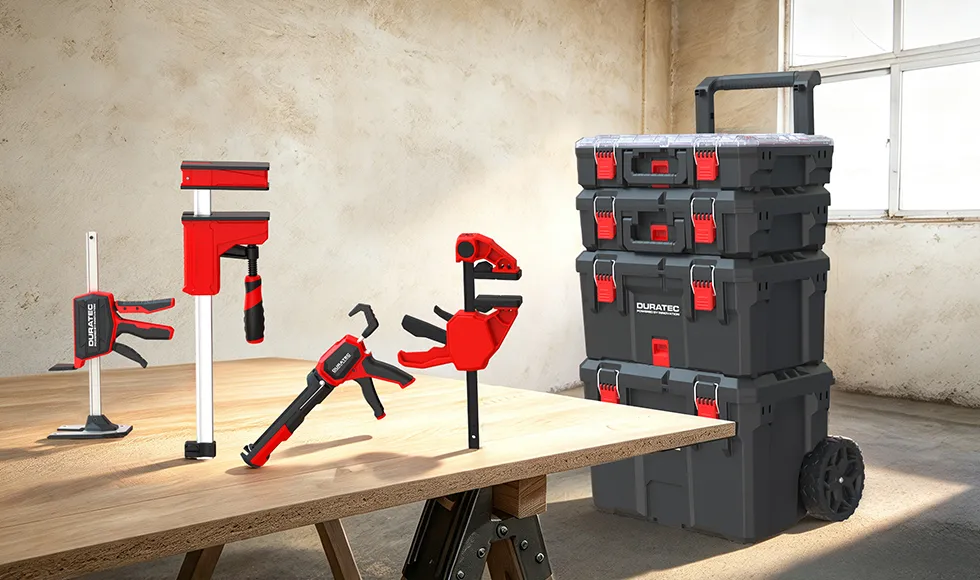
The DuraStack modular toolbox system features a patented automatic interlocking mechanism.
Traditional modular toolbox systems commonly require users to stack the boxes and then manually operate side latches or locking mechanisms. With DuraStack, the connection automatically locks when the boxes are stacked, reducing the need for an additional manual locking step.
A second advantage is the front-release mechanism.
Some conventional modular systems require users to access release mechanisms from both sides of the toolbox. DuraStack positions the release control at the front, allowing easier one-handed unlocking. This can be especially useful when boxes are stacked high, positioned against a wall, or used in areas where side access is limited.
DuraStack is also a large injection-molded product that places significant demands on material selection, tooling accuracy, molding consistency, and dimensional control.
Duratec has extensive injection molding experience and operates more than 120 injection molding machines, allowing us to apply our strengths in engineering plastics, mold development, and large-scale production to this product category.
DuraStack materials and manufacturing processes are also managed in accordance with applicable European environmental and material compliance requirements.
Why do Duratec woodworking clamps offer longer service life?
The service life of a woodworking clamp is not determined by a single component. It is the result of material selection, heat treatment, surface finishing, structural design, and long-term validation.
First is material selection.
For engineering plastic components, Duratec selects materials according to the loading conditions and functional requirements of each part.
For clamp bars, selected Duratec products use medium- to high-carbon steel with yield strengths of more than 300 MPa, which is higher than the approximately 215 MPa found in some lower-strength steel alternatives.
Many Duratec clamp components also use ductile iron. Compared with certain traditional malleable iron materials, ductile iron can provide improved strength, toughness, and fatigue resistance.
Second is heat treatment.
Selected Duratec clamp bars are induction hardened to improve surface hardness and wear resistance. After appropriate treatment, the surface hardness of some bars can reach approximately HRC 60, while untreated steel is typically much softer.
Higher surface hardness helps reduce wear caused by repeated sliding and locking of the movable jaw and contributes to long-term locking stability.
Third is corrosion resistance.
For selected F-clamp products, the bar finish can withstand up to 72 hours of salt-spray testing, providing greater corrosion protection than more basic surface treatments.
Finally, and equally importantly, is engineering design and validation.
Duratec has an experienced R&D and engineering team. During product development, we evaluate not only maximum performance but also repeated operation, sustained loading, wear, and long-term durability.
Materials provide the foundation for performance, but thoughtful structural design and comprehensive validation determine whether those material advantages translate into long-term reliability in actual use.